Making progress when priorities change
A short guide to choosing one change, delivering it and learning before expanding the scope.
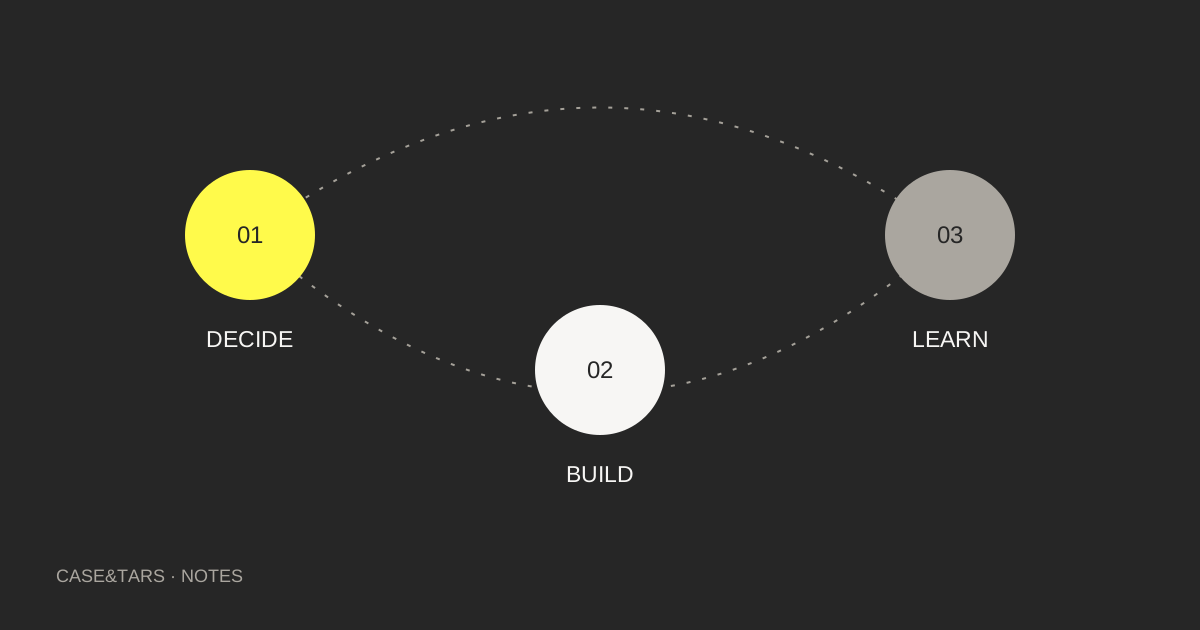
Start with one decision
When everything feels urgent, a longer list rarely helps. Identify which decision is stuck, who can make it and what information is missing. The first deliverable might be a dependency map or a small trial before a new application is written.
A cycle the team can repeat
- Choose one problem. Describe something observable: entering data twice, finding a version or waiting for approval.
- Agree a small change. Define who will use it, what is included and what stays outside this delivery.
- Try the complete journey. Include exceptions and errors, not just the ideal case.
- Observe and decide. Check whether people use the change and what gets in their way before adding scope.
A planning example
Imagine a team receiving requests by email and copying them into a spreadsheet. Before building a complete CRM, it could try a form with an owner, a shared list and a visible status. The first review asks whether requests still get lost and whether the team still needs the email thread to understand them.
This is an illustrative method, not a result attributed to a client. If the trial does not reduce friction, revisit the flow; automating more steps will not necessarily solve the problem.
What to write down
One page is enough to start: the problem, an owner, the trial’s scope, dependencies, a sign of improvement and a review date. Update decisions alongside the work so design, development and operations share the same context.
Explore our approach to Strategy or tell us which decision needs to move forward.